

 Deutsch
 English
 Español
 Italiano
 Nederlands
 Polski
 Português
 Русский
 Türkçe
 Svenska
 Chinese
 Magyar
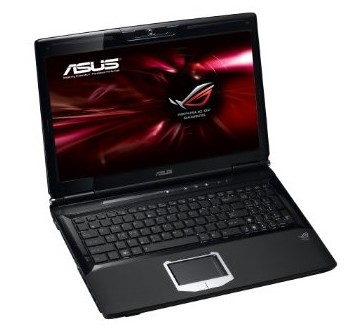
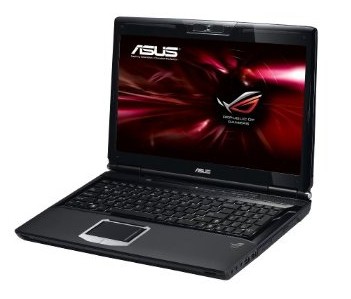
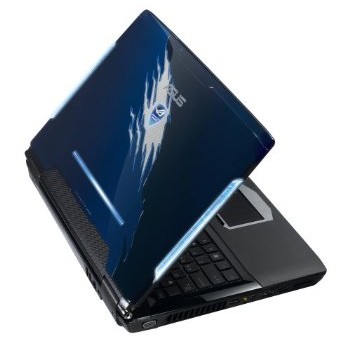
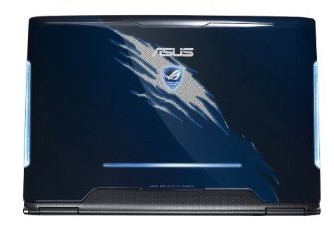
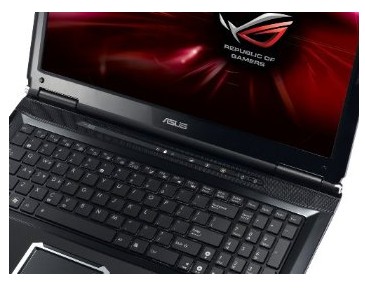
Asus G51J-3D
Spécifications de l'ordinateur portable
Pricecompare
Moyenne de 10 notes (à partir de 10 critiques)
Critiques pour le/la Asus G51J-3D
Source: Good Gear Guide
 EN→FR Archive.org version
The ASUS G51J is a pricey 3D notebook that's aimed at gamers. While the ASUS G51J won't appeal to many users, and it may even miss the mark when it comes to gamers who want to be early adopters of 3D technology — it could definitely use more graphics grunt under the hood in order to compete with other dedicated gaming machines on the market, especially considering its asking price.
Critique simple, disponibles en ligne, De taille moyenne, Date: 11/18/2010
Notes: Note globale: 50%
Source: IT Reviews
EN→FR Archive.org versionAnyone who visited the Gadget Show at the NEC this year will know that much of the event was obsessed with showing off all the latest 3D computer technology in the wake of the massive success of Avatar. 2010 has become 3D Year and all the major computer manufacturers are jumping on board the supposed gravy train: the ASUS G51J 3D notebook is simply the latest evolution.
Critique simple, disponibles en ligne, Très courte, Date: 11/09/2010
Notes: Note globale: 90% performances: 90%
Source: Digital Versus
EN→FR Archive.org versionAsus continues its progress on the laptop PC gamer market and certainly isn't afraid to innovate. The G51J 3D shows that 3D can also get mobile. This technology gets it a fifth star in our rating. The results are convincing and performances are up to standard. We can't wait for a version with a better screen and faster graphics card for 3D. And why not a 17.3 inch model?
Critique simple, disponibles en ligne, De taille moyenne, Date: 10/25/2010
Notes: Note globale: 100%
Source: Digital Versus
EN→FR Archive.org versionAsus continues its progress on the laptop PC gamer market and certainly isn't afraid to innovate. The G51J 3D shows that 3D can also get mobile. This technology gets it a fifth star in our rating. The results are convincing and performances are up to standard. We can't wait for a version with a better screen and faster graphics card for 3D. And why not a 17.3 inch model?
Critique simple, disponibles en ligne, De taille moyenne, Date: 04/30/2010
Notes: Note globale: 100% performances: 90% écran: 60% mobilité: 40% finition: 80%
Source: PC Pro
EN→FR Archive.org versionThe 3D craze has broken free of its early-adopter shackles, thanks in no small part to the huge success of Avatar, and manufacturers are stepping up their assault on the tech-savvy public. This model of the Asus G51J is the first 3D Vision laptop, and comes complete with the necessary glasses and transceiver in the box. The 3D effect is better than ever, but building it into a 15.6in laptop creates more than a few issues.
Critique simple, disponibles en ligne, De taille moyenne, Date: 03/19/2010
Notes: Note globale: 67% prix: 50% performances: 83%
Source: Digital Trends
EN→FR Archive.org versionStereoscopic viewing is mere months away from exploding—or seeping, depending on one’s level of zeal and optimism—into our living rooms via new 3-D televisions from mainstream manufacturers like Sony and Panasonic. The first laptop to incorporate Nvidia’s 3D Vision technology, Asus’ G51J 3D, is a stereoscopic gaming powerhouse.
Critique simple, disponibles en ligne, Longue, Date: 03/11/2010
Notes: Note globale: 70%
Source: Reg Hardware
EN→FR Archive.org versionAs far as 3D goes, the Asus G51J 3D is certainly a more capable machine than Acer’s 5738DZG. Not only is it more powerful, but with the active glasses it can also deliver a better 3D experience. The high price tag is the obvious stumbling block. Prices will no doubt fall if and when 3D finally takes off, but at the moment anyone looking to wave goodbye to 2D will have to pay a rather hefty premium.
Critique simple, disponibles en ligne, Longue, Date: 01/28/2010
Notes: Note globale: 70%
Source: CNet
EN→FR Archive.org versionNvidia's 3D Vision technology renders most games in pretty impressive 3D, but it requires an investment in compatible hardware, including a 120Hz LCD monitor, approved desktop GPU with dual-link DVI connection, and a pair of battery-powered 3D glasses with a USB infrared emitter. The Asus G51J 3D is the first laptop to incorporate Nvidia's 3D Vision technology. If you absolutely love the idea of 3D gaming, this proof-of-concept system will work well as a pricey showpiece.
Critique simple, disponibles en ligne, De taille moyenne, Date: 01/20/2010
Notes: Note globale: 79%
Source: CNet
EN→FR Archive.org versionWe've been very impressed with Nvidia's 3D Vision technology, which renders most games in pretty impressive 3D, but it requires an investment in compatible hardware, including a 120Hz LCD monitor, approved desktop GPU with dual-link DVI connection, and a pair of battery powered 3D glasses with a USB IR emitter. The Asus G51J-3D is the first laptop to incorporate Nvidia's 3D vision technology. If you absolutely love the idea of 3D gaming, this proof-of-concept system will work well for a pricey showpiece.
Critique simple, disponibles en ligne, De taille moyenne, Date: 12/15/2009
Notes: Note globale: 75% performances: 90% équipement: 90% mobilité: 40%
Source: Laptop Mag
EN→FR Archive.org versionThe ASUS G51J 3D is an exciting notebook for early adopters who want to take their gameplay to the next level. While we would’ve liked a higher-resolution screen—and higher frame rates—this rig is more than capable of playing the latest titles. At $1,699, it’s $200 more expensive than the non-3D version, but that premium is reasonable considering the newness of the technology. Acer’s $779 Aspire 5738DG does a better job of bringing 2D movies into the third dimension, but Nvidia’s 3D technology is more effective, and provides better viewing angles with the included glasses. If you’re a gamer, the G51J 3D is definitely worth a look.
Critique simple, disponibles en ligne, Longue, Date: 12/01/2009
Notes: Note globale: 70%
Commentaire
NVIDIA GeForce GTX 260M:
La Nvidia GeForce GTX 260M est essentiellement une GeForce 9800M GTX plus rapide en 55nm et basée sur le noyau G92b (et donc pas comparable à la GTX 260 de bureau). Par rapport à la 9800M GTX, la GTX 260M est fabriqué en 55nm et donc un une plus grande fréquence d’horloge.
Ces cartes devraient être capables de faire tourner tout les jeux d'aujourd'hui, mais la plupart d'entre eux uniquement en détails moyens ou faibles et avec des résolution basses. Les plus vieux jeux ou les jeux moins gourmands restent jouables avec de beaux graphismes.
>> Plus d'informations sont à trouver dans notre comparaison des cartes graphiques mobiles et ainsi que dans notre liste des Benchmarks affiliés.
720QM: Le Core i7-720QM est le Core i7 Quad Core de 2009 le plus lent: entre 1.6 et 2.8 GHz (grâce au mode Turbo). Il a l'avantage sur les logiciels optimisés pour plusieurs processeurs mais un peu moins bon pour les application mono core. Comparé aux autres Core i7 mobile, le 720QM ne possède que 6Mo de cache L3.
>> Plus d'informations sont à trouver dans notre comparaison des processeurs mobiles.
15.60": 15-16 pouces Soit la diagonale d’écran la plus commune dans le monde des ordinateurs portables. Il s’agit de la taille d’écran offrant actuellement la plus grande variété de choix sur le marché.
>> Pour en savoir un peu plus sur la finesse des pixels à l'écran, jetez un coup d'œil à notre liste des DPI (PPP, points par pouce).
3.4 kg:
En temps normal, seuls les ordinateurs portables de 17 pouces affichent un tel poids à la pesée. Pour une machine de 15 pouces, on dira que l’appareil appartient aux modèles les plus lourds. Le poids acceptable pour une utilisation sédentaire.
Asus: ASUSTeK Computer Inc. est un important fabricant de matériel informatique taïwanais basé à Taipei, fondé en 1989. Sous la marque Asus, la société fabrique une large gamme de produits, notamment des ordinateurs portables, des ordinateurs de bureau, des cartes mères, des cartes graphiques, des moniteurs, des smartphones et des équipements réseau. , des systèmes complets et des composants PC pour les utilisateurs finaux.
Sous la marque ROG (Republic of Gamers), ASUS fabrique des ordinateurs portables de jeu connus des joueurs pour leurs spécifications puissantes, leurs cartes graphiques dédiées, leurs écrans à taux de rafraîchissement élevé et leurs systèmes de refroidissement avancés.
Au-delà des jeux, une large gamme d'ordinateurs portables est proposée pour différents besoins et budgets, des ultrabooks ultra-minces et légers aux convertibles 2-en-1 polyvalents et aux options économiques. En 2023, Asus détenait une part de marché mondiale de 7 % sur le marché des PC.
La satisfaction des clients vis-à-vis des ordinateurs portables ASUS concerne les performances, les fonctionnalités et le bon rapport qualité-prix des ordinateurs portables ASUS. Cependant, comme pour toute marque, des problèmes tels que la surchauffe, la compatibilité des pilotes ou des problèmes de qualité de construction sont parfois signalés.
77.1%: La note n'est pas convaincante. On doit considérer qu'il n'y a pas beaucoup d'ordinateurs portables qui reçoivent une note en dessous de 60%. Ce portable est en dessous de la moyenne, Nous ne conseillons pas vraiment son achat.
>> Plus d'informations sont à trouver dans notre guide d'achat pour les ordinateurs portables.